Accelerated Rock Breakage with Soundless Chemical Demolition Agents
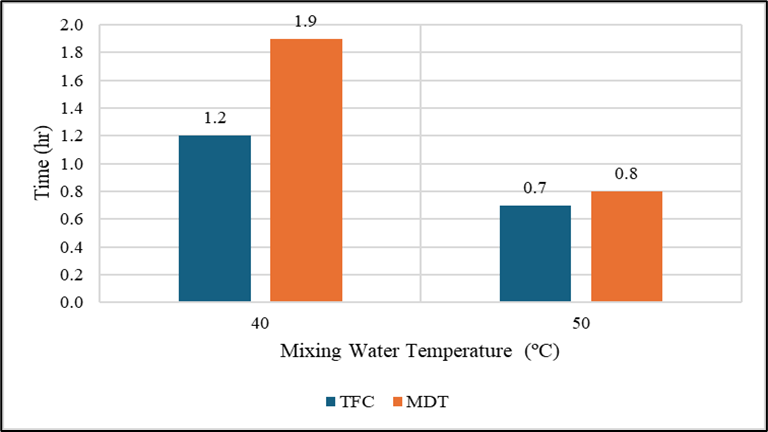
Time to first crack (TFC) and minimum demolition time (MDT)
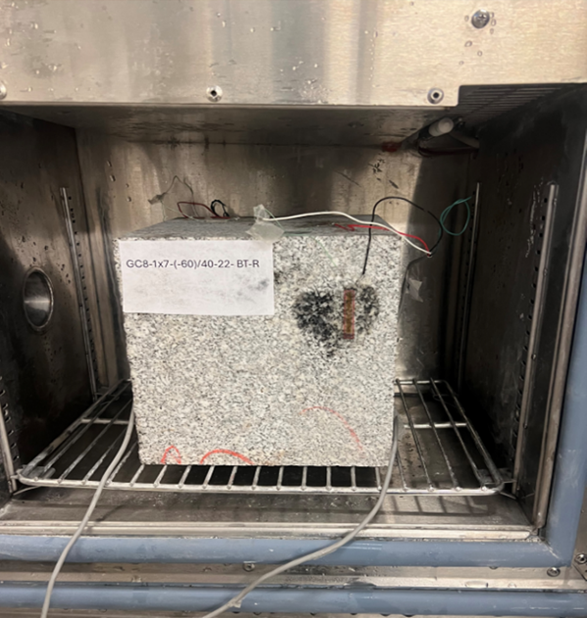
Rock breakage of a 20 cm granite cube at -20C in microclimate chamber
Sponsor: NSERC, Natural Resources Canada, Newmont, Ministry of Economics and Innovation of Quebec
MSC Thesis, Patrick Adum Darko (2025)
Traditional rock breakage methods in hard rock mining heavily rely on explosives, which pose significant environmental, safety, and operational concerns to workers and surrounding communities. To address these concerns, Soundless Chemical Demolition Agents (SCDA) have gained attention as a safer and more sustainable alternative for rock breakage. SCDA, primarily composed of lime (CaO), are soundless, vibration-free, and fumeless, making them particularly suitable for applications where minimizing dust, noise, and fumes is essential. Despite these advantages, SCDA performance can be influenced by environmental and operational factors, particularly in cold climates. This thesis investigates key parameters affecting SCDA performance and introduces innovative methods to enhance their efficiency in challenging conditions.
This thesis is divided into two phases. The first phase focuses on the effect of warmer mixing water temperature on the mechanical performance of two commercially available SCDA brands: Betonamit Type R (BT-R) and Dexpan Type 3 (DXP-3). Experiments conducted on 152.4 mm (6 inch) cubic granite samples at varying ambient temperatures reveal that higher mixing water temperatures significantly accelerate rock breakage. For instance, increasing the mixing water temperature from 20°C to 40°C reduced the time to first crack (TFC) by 36% for BT-R and 74% for DXP-3 at 0°C ambient temperature. These results highlight the critical role of heated mixing water in enhancing SCDA efficiency, particularly in colder ambient conditions typical of Canadian open-pit mining operations.
The second phase investigates a hybrid approach, termed Accelerated Rock Breakage (ARB), to address SCDA poor performance issues in extreme cold climates. The ARB method combines the use of heated mixing water, identified as beneficial in the first part of this thesis, with electric heating of the borehole using high-temperature nichrome wire. Experiments conducted in a temperature-controlled chamber at ambient temperatures ranging from -20°C to -60°C on 203.2 mm (8 inch) cubic granite rock samples demonstrate the effectiveness of the ARB method. At -40°C, combining 50°C mixing water with a 25V electric wire heating system reduced the time to first crack (TFC) and minimum demolition time (MDT) to 0.7 and 1.1 hours, respectively. The results of a detailed parametric study confirm the improved performance of the ARB method compared to approaches based solely on individual factors.
This thesis contributes to advancing sustainable rock breakage methods for the mining industry by optimizing SCDA performance through tailored operational adjustments and hybrid approaches. The findings offer practical solutions to reduce reliance on explosives, mitigate environmental impacts, and improve operational efficiency in mining operations, particularly in cold climate regions.